

Marketing Down Under: My Australian Take on the Start of 2026
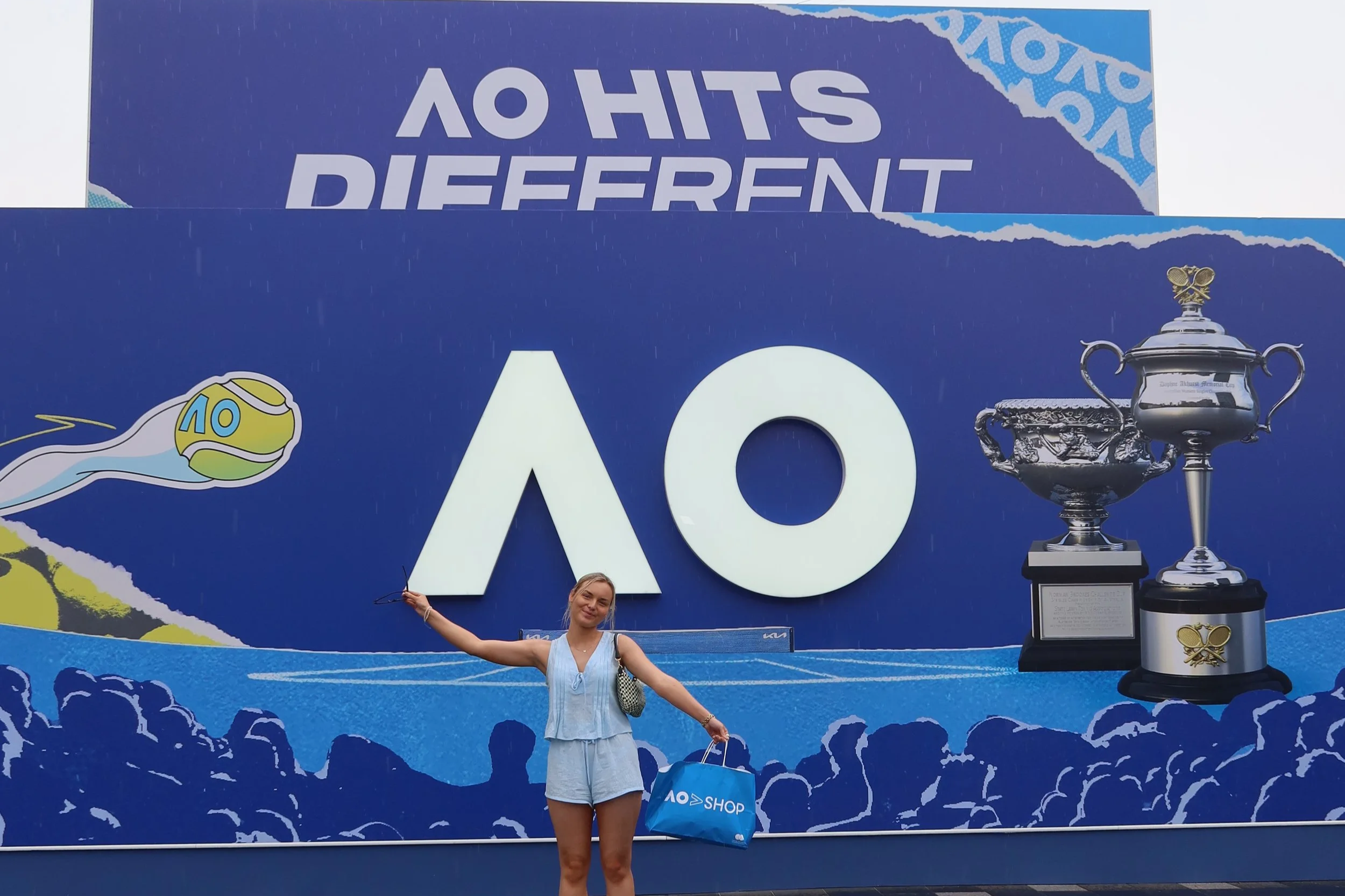
I landed in Sydney on 1st January after 26 hours of travel, slightly delirious and running on pure adrenaline. And yet within minutes of stepping outside, marketing was already doing its thing.
Specsavers had launched a campaign that genuinely made me question whether I’d landed in the wrong city. Plastered across Sydney were ‘Welcome to Melbourne’ signs - part of a national campaign designed to make you do a double take. After that length of travel, I can confirm: it works.
It was clever, simple and perfectly on-brand. A reminder that the best campaigns don’t always need to be complicated. They just need to tap into a human truth - in this case, confusion, humour and a moment of vulnerability - and amplify it.
And that was only day one.
A few weeks later, I was lucky enough to head to Melbourne for The Australian Open finals weekend. I found myself sitting in Rod Laver Arena for the women’s final between Aryna Sabalenka and Elena Rybakina - a match that’s already being called one of the best women’s finals in recent years. It was one of those ‘I can’t believe I’m actually here’ moments.
But while most people were fully locked into the tennis (which, of course, I was too), my marketing and events brain was in overdrive.
The Australian Open isn’t just a sporting event. It’s a fully immersive brand experience.
Everywhere you looked, there was activation. Aperol Spritz terraces packed with fans. New Balance commanding attention. AO’s own branding woven seamlessly through every touchpoint. It never felt forced - it felt considered.
One partnership that really stood out was MECCA. The Australian Open welcomed MECCA back as Official Beauty Partner, with MECCA COSMETICA joining as Official SPF Partner and they showed up properly. The MECCA Pro Shop - a three-storey beauty hub in The Village - offered express touch-ups, skincare education and exclusive product activations. Across the precinct there were SPF sampling huts and quick top-up stations, plus an immersive MECCA COSMETICA SPF Studio designed to keep fans protected while they soaked up the AO atmosphere. It made complete sense. In the Australian summer, SPF isn’t a luxury - it’s essential. That’s what made it such smart marketing. It was useful, relevant and genuinely added to the fan experience rather than interrupting it.
Inside Rod Laver Arena for the final, the marketing presence stepped up another level. Emirates. Pirelli. Louis Vuitton.
And Louis Vuitton’s involvement was particularly smart - providing the trophy case as part of their travel range campaign, ‘Victory travels in Louis Vuitton.’ It felt premium, aspirational and perfectly placed in a global sporting moment.
This is what big-event marketing does best: it associates brands with emotion. You’re not just sponsoring - you’re embedding yourself into a cultural moment.
Before going, I’d heard the Australian Open described as the “Happy Slam,” and when you’re there you completely understand why. The atmosphere is relaxed, inclusive and genuinely joyful. But what I admire most is how deliberately the organisers have evolved it. There was a time when the Australian Open was often considered the forgotten Slam. Instead of accepting that, they’ve consistently innovated. They’ve made it an event you can’t ignore.
This year’s addition of the One Point Slam was a perfect example. A high-stakes, single-elimination event where 48 players - including pros like Carlos Alcaraz and amateurs competed for a $1 million AUD prize. Winner takes all. One point. Amateur Jordan Smith winning the 2026 event after beating Jannik Sinner was the kind of story sport - and marketing - dreams of. It was talked about globally, applauded by fans and even players were calling for it to be added to every Slam. It created headlines, unpredictability and a completely new layer to the tournament. That’s innovation with purpose.
What struck me just as much, though, was how accessible the event still felt. You could buy a $10 ground pass and experience the atmosphere, the vendors and the activations without stepping into the main arena. That accessibility builds community. It builds the next generation of fans. It makes the brand feel open rather than exclusive.
Being down under since the start of the year has been non-stop, but it’s reminded me why I love working in marketing and events. From a tongue-in-cheek airport billboard to a world-class global sporting event, marketing really is everywhere. When it’s done well, you don’t just see it - you feel it.
And if there’s one thing Australia has reinforced for me at the start of 2026, it’s this: you have to keep innovating if you don’t want to be forgotten. Whether you’re a global tennis tournament or a growing brand in the South of Scotland, standing still isn’t an option. But alongside that, it’s also reminded me that innovation doesn’t always mean complexity. Sometimes the smartest ideas are the simplest ones - the ones that make you pause, smile, double take or feel part of something bigger.
That’s the kind of marketing that cuts through the noise.
Written by Anna Changleng, Marketing Executive at The Marketeers Scotland